Non-Human Identity Management for Governance & Security

Non-Human Identities (NHIs) such as service accounts, certificates, APIs, and IoT devices have become one of the greatest challenges in modern cybersecurity. Discover how effective governance and structured Non-Human Identity Management create transparency, minimize risks, and ensure long-term compliance.

Why Non-Human Identities Are Now at the Center of Cybersecurity

Digital transformation is accelerating rapidly—and with it comes a new challenge: Non-Human Identities (NHIs). These are the identities of machines, applications, bots, APIs, and IoT devices, which now outnumber human identities in organizations by a significant margin.
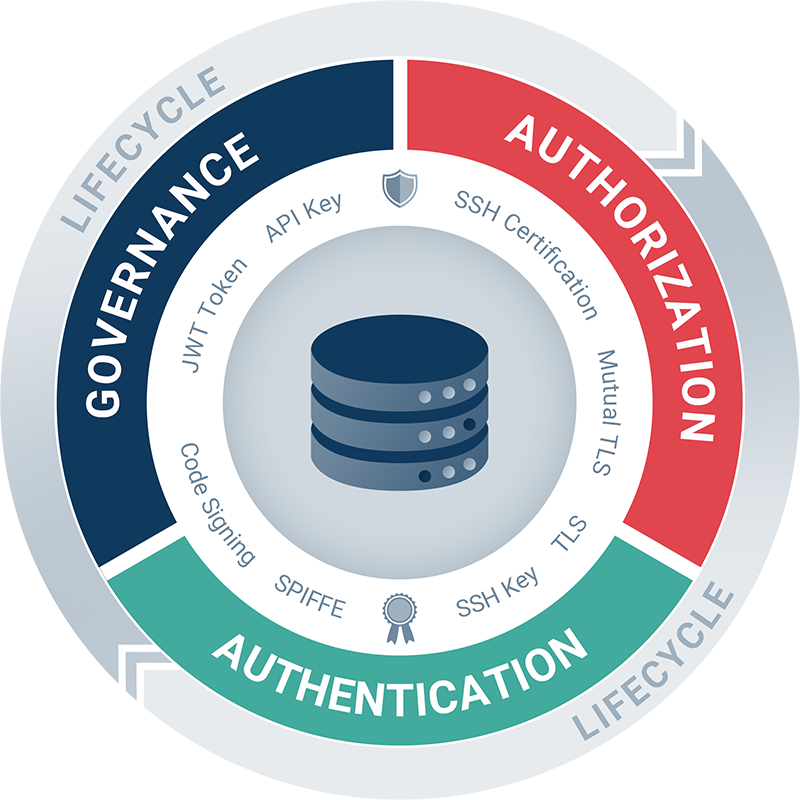
Non-Human Identity - Grafik mit Governance, Authorization, Authentication

According to recent analyses by TechRadar and ITPro, many organizations lack clear governance, let alone a comprehensive strategy for managing these digital identities. While traditional identity security has focused on employees, customers, and partners for decades, a dangerous imbalance has emerged: machine identities often outnumber human identities by as much as 100 to 1, yet their protection remains largely inadequate.


Non-Human Identity - City & Eye

Inventorying Non-Human Identities – Your Path to Greater Security and Compliance

Gain exclusive access to our concise whitepaper. Learn how to achieve complete visibility into machine identities—including certificates, SSH keys, and service accounts—in just six days, laying the foundation for compliance, automation, and sustainable security.

Complete the form below to receive exclusive access to the whitepaper!

     Privacy Policy.

    The Risks: From Dynamic Lifecycles to Shadow AI

    According to ITPro (August 2025), the biggest challenges in managing Non-Human Identities include:

    • Lack of ownership: It is often unclear who is responsible for the security of a machine identity.
    • Dynamic lifecycles: Bots, containers, and cloud instances are created and removed within seconds, often without consistent identity management.
    • Granular authentication: NHIs require authentication methods that are both flexible and highly precise.
    • Limited traceability: Without sufficient visibility, organizations cannot reliably reconstruct critical access events during security incidents.

    According to TechRadar, a particularly significant risk is Shadow AI—AI systems and autonomous agents deployed without approval that access sensitive corporate data. Because they operate outside established identity governance frameworks, they substantially increase the organization’s attack surface.

    Non-Human Identities Are the New Attack Surface

    In a world where AI systems, bots, and automated processes play critical roles, Non-Human Identity Security is no longer optional. Organizations that fail to act today risk severe security vulnerabilities, compliance violations, and reputational damage.

    The message is clear: only organizations that proactively manage Non-Human Identities can secure their digital future.

    Non-Human Identity vs. Machine Identity – An Important Distinction

    Many organizations use these terms interchangeably, but they are not the same:

    • Non-Human Identity refers to all non-human digital entities, including applications, bots, APIs, and IoT devices.
    • Machine Identity is a subset of NHIs and specifically refers to digital certificates, cryptographic keys, and tokens that secure machine-to-machine communication.

    Understanding this distinction is essential for building an effective identity security strategy.

    Non-Human Identity - Mann im Server

    Why Non-Human Identity Management Is Essential for Municipal Utilities

    The digital transformation of the energy and heating sector involves far more than expanding metering and grid infrastructure. Future-ready solutions must enable sector coupling, fully automated grid services, decentralized energy generation, and seamless interaction between market participants—all while meeting the highest standards for data protection and cybersecurity.

    A critical prerequisite is the establishment of digital trust chains. In its Blockchain Machine Identity Ledger pilot project, the German Energy Agency (dena) identified the lack of effective digital identities—for both humans and Non-Human Identities—as “one of the greatest barriers to digitalization in the energy system.” This highlights a clear reality: without robust identity governance, the digital transformation of the energy sector cannot succeed.

    Non-Human Identity Management as the Foundation of Security

    Modern IT environments require secure access not only for employees but also for countless non-human entities, including:

    • IoT devices used in smart metering and grid control systems
    • APIs, microservices, and enterprise applications
    • Certificates and secrets across hybrid cloud environments

    Municipal utilities and public energy providers are particularly affected. As operators of critical infrastructure (KRITIS), they must comply with increasingly stringent regulations while addressing growing cyber threats and the ongoing digitalization of energy networks.

    Without a structured Non-Human Identity Management (NHIM) approach, organizations face significant risks, including:

    • Shadow identities created by outdated or unknown accounts and cryptographic keys—a common attack vector
    • Certificate sprawl caused by insufficient visibility and a lack of automated renewal processes
    • Insecure secrets management that increases the risk of supply chain attacks
    • Overprivileged service accounts that violate the principle of least privilege
    • Unclear ownership and accountability, creating compliance and governance risks

    Non-Human Identity Management: Framework and Best Practices

    While traditional Identity and Access Management (IAM) focuses on user accounts, Non-Human Identity Management (NHIM) addresses the security, authentication, governance, and traceability of machine identities. Its goal is to systematically manage digital certificates, secrets, and other machine credentials while reducing risk and ensuring regulatory compliance.

    Best Practices for Municipal Utilities and Energy Providers

    • Build a comprehensive identity inventory: Maintain a complete inventory of all Non-Human Identities, including ownership, validity periods, and business purpose.
    • Automate identity processes: Automate key rotation, token renewal, certificate issuance, and other routine lifecycle activities.
    • Implement lifecycle management: Define and enforce standardized lifecycle processes for every Non-Human Identity.
    • Establish governance models: Clearly define roles, responsibilities, and ownership for all machine identities.
    • Apply least-privilege access: Ensure every Non-Human Identity has only the permissions required to perform its function.
    • Enable continuous monitoring and auditing: Log all activities, detect anomalies, and respond rapidly to suspicious behavior or misuse.

    For municipal utilities operating hybrid IT environments, a cross-platform approach is recommended—one that integrates both on-premises infrastructure and cloud environments. Providers such as OEDIV SecuSys GmbH work closely with energy companies to develop tailored governance frameworks and security models that address the unique challenges of the energy sector.

    Newsletter

    Stay Informed

    Subscribe to our newsletter to receive regular insights into Identity & Access Management.

      By subscribing, you agree to our Privacy Policy.

      Read More

      Related Articles

      Ready for an Initial Consultation?

      Let's assess together how resilient and future-ready your Identity & Access Management strategy really is.