Cloud Infrastructure Entitlement Management: The Key to Control and Compliance in Multi-Cloud Environments

Cloud Infrastructure Entitlement Management (CIEM) provides complete visibility into permissions across hybrid and multi-cloud environments. Learn how organizations can identify excessive access rights, meet compliance requirements, and effectively secure cloud resources.

The cloud has become the backbone of modern IT. Organizations increasingly rely on hybrid and multi-cloud strategies to achieve greater flexibility, scalability, and cost efficiency. However, as cloud environments expand, managing identities and permissions becomes significantly more complex. This is where Cloud Infrastructure Entitlement Management (CIEM) comes in. CIEM provides the visibility, governance, and control required to protect sensitive cloud resources while meeting regulatory and compliance requirements.
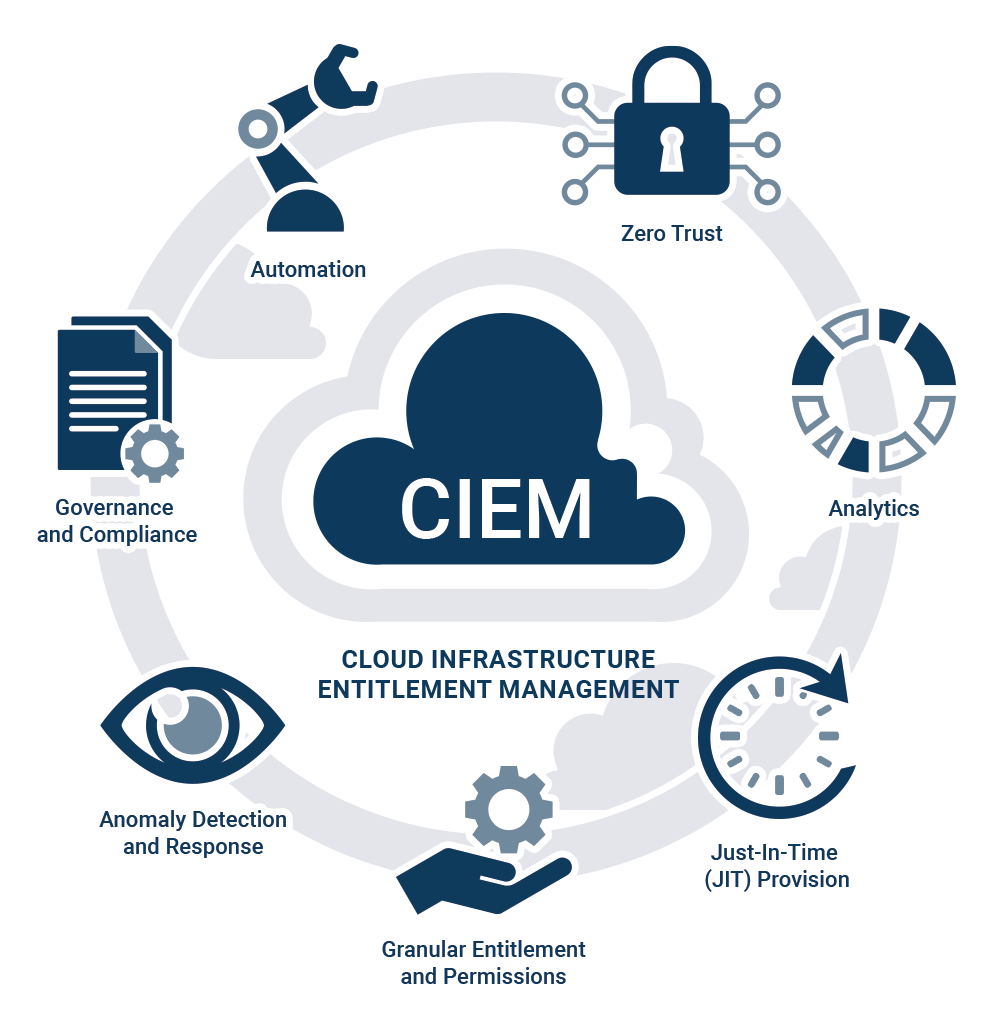
CIEM
Header - Cloud Infrastructure Entitlement Management

The Challenge: Visibility and Control in a Complex Permission Landscape

In traditional on-premises environments, permissions could be managed centrally through Active Directory or similar directory services. In the cloud, every platform—including Amazon Web Services (AWS), Microsoft Azure, Google Cloud, and SaaS applications—introduces its own roles, policies, APIs, and permission models.

The result is a fragmented identity landscape with thousands of identities, excessive permissions, and limited visibility.

Many organizations no longer know:

  • Who has access to which cloud resources.
  • Whether those permissions are still required.
  • Whether access complies with internal policies and regulatory requirements.

The consequences include an expanded attack surface, unnecessary privileges, and an increased risk of data breaches or non-compliance with standards such as the GDPR, ISO/IEC 27001, and industry-specific regulations.

CIEM: Visibility, Analytics, and Automation for Cloud Security

A modern Cloud Infrastructure Entitlement Management (CIEM) solution restores governance and control over cloud access management.

CIEM platforms aggregate entitlement data from all connected cloud environments and analyze it centrally to identify security risks, including:

  • Excessively privileged accounts
  • Unused or orphaned identities
  • Shadow administrators and configuration errors
  • Violations of least-privilege principles

Based on these insights, organizations can automatically enforce security policies, optimize permissions, and generate compliance reports on demand. As a result, CIEM has become an essential capability for security, audit, and compliance teams.

Mann mit Notebook im Serverraum

Integrating CIEM with Existing IAM and IGA Platforms

Many organizations already use Identity & Access Management (IAM) or Identity Governance & Administration (IGA) solutions. However, these platforms often have limited visibility into dynamic cloud environments such as containers, Kubernetes, or DevOps ecosystems.

This is where modern CIEM solutions provide significant value. They integrate seamlessly with existing IAM and IGA platforms while extending identity governance into cloud-native environments.

A typical example:
An organization already manages employee identities, approval workflows, and access certifications through its IGA platform. After integrating a CIEM solution, cloud-specific permissions from services such as Microsoft Azure and AWS Identity and Access Management (IAM) are continuously analyzed alongside traditional identity data.

The result includes:

  • A centralized view of all entitlements across on-premises and cloud environments
  • Automated remediation of non-compliant permissions
  • Continuous compliance reporting
  • Reduced audit effort and lower security risk

This transforms traditional Identity & Access Management into a comprehensive Identity Security lifecycle that extends across the entire hybrid cloud infrastructure.

Industry best practices demonstrate the measurable impact of CIEM. For example, a German manufacturing company with more than 10,000 employees operated multiple cloud platforms supporting development, production, and sales. Cloud access management was decentralized, causing permissions to grow unchecked.

After implementing a CIEM solution integrated with its existing IGA platform, the organization gained complete visibility into every cloud identity and entitlement. Within just a few weeks, more than 30% of unnecessary permissions were automatically identified and removed without disrupting business operations. In addition, compliance reporting for ISO/IEC 27001 audits and internal reviews was reduced from several days to just a few minutes.

Conclusion: CIEM as the Next Step in Identity Security

Cloud Infrastructure Entitlement Management is not a replacement for existing identity strategies—it is their logical evolution. By combining visibility, automation, governance, and compliance across increasingly complex cloud environments, CIEM enables organizations to regain control over cloud permissions while reducing cyber risk. For organizations embracing hybrid and multi-cloud architectures, CIEM is a critical component of a future-ready, audit-ready, and comprehensive Identity Security strategy. 

Newsletter

Stay Informed

Subscribe to our newsletter to receive regular insights into Identity & Access Management.

    By subscribing, you agree to our Privacy Policy.

    Read More

    Related Articles

    Ready for an Initial Consultation?

    Let's assess together how resilient and future-ready your Identity & Access Management strategy really is.